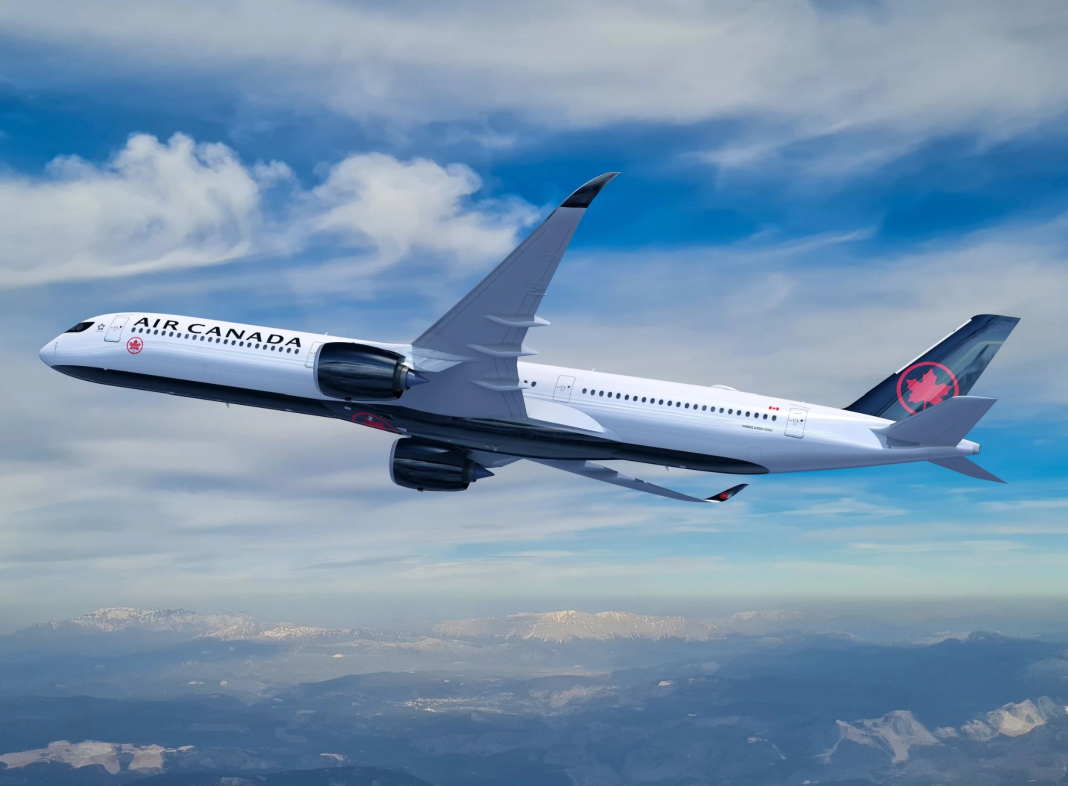
Air Canada disclosed a firm order for eight Airbus A350-1000 aircraft on 12 February 2026 in Toulouse, France. The airline said the order had been listed as undisclosed in November 2025. The disclosure describes the purchase as part of Air Canada’s long-haul fleet strategy and as an additional commitment to Airbus widebody aircraft. No delivery schedule, configuration details, or financial terms were provided in the announcement.
According to the statement, Air Canada selected the A350-1000 to support long-haul operations and future network growth. The airline referenced operating economics and lower operating costs as key elements of the aircraft’s role in its fleet plan. Airbus and Air Canada also positioned the A350-1000 as an aircraft intended to support non-stop connectivity from Canada to markets across the Indian subcontinent, Southeast Asia, and Australia, based on the aircraft’s published range capability.
The announcement cited performance characteristics associated with the A350-1000, including a stated range of up to 9,000 nautical miles. The release also referenced the A350’s technology and aerodynamic design, and said the aircraft uses Rolls-Royce engines and lightweight materials. Airbus stated that these features provide a 25% reduction in fuel burn and emissions compared with previous-generation competitor aircraft, as described in the release. The company did not provide a baseline aircraft type, mission profile, or measurement methodology in the statement.
Airbus also referenced the A350’s capability to operate with up to 50% Sustainable Aviation Fuel (SAF), stating that this applies to all Airbus aircraft. Airbus said it is targeting 100% SAF capability for its aircraft by 2030. The release additionally stated that, at the end of January 2026, the A350 Family had accumulated more than 1,500 orders from 67 customers worldwide.
In remarks included in the release, Air Canada stated that the A350-1000 would be central to its long-haul fleet strategy and described the selection as the next step in fleet evolution. Airbus stated that the selection supports fleet modernisation and referenced range and performance objectives. The release also noted the aircraft’s “Airspace” cabin concept and described cabin altitude and noise characteristics, but did not include Air Canada-specific cabin layouts, seat counts, or entry-into-service timing.