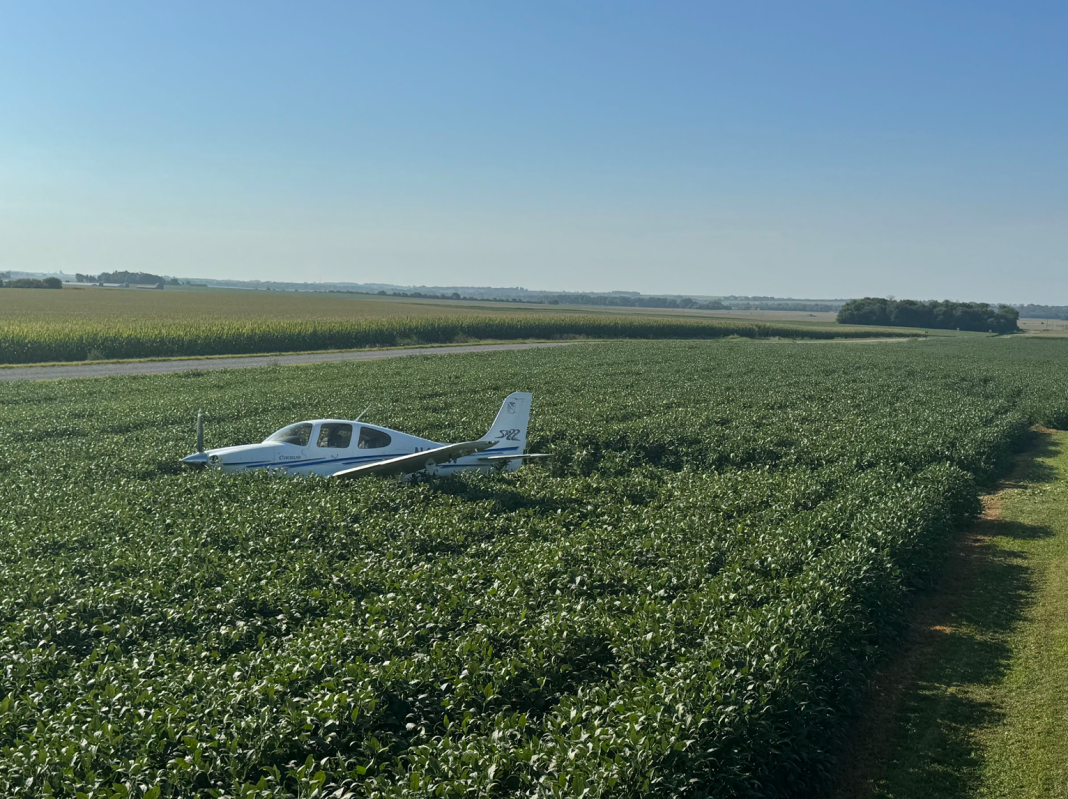
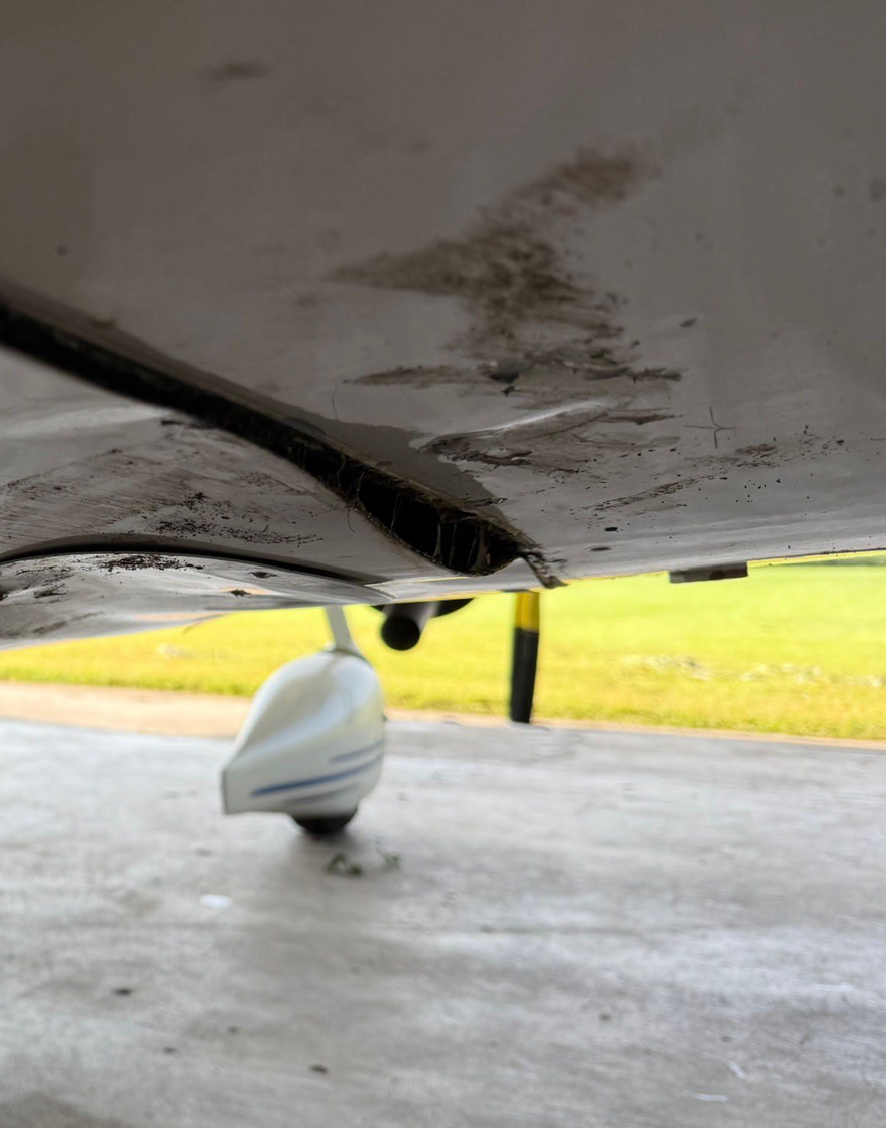
A Cirrus Design Corp SR22, registration N45JN, overran the departure end of runway 09 at Spotts Field (05IA) near Nora Springs, Iowa, on August 27, 2025, at 20:55 local time. The airplane sustained substantial damage to the fuselage after departing the runway surface and entering an agricultural area. The pilot and three passengers reported no injuries.
The flight was conducted under 14 CFR Part 91 as a personal general aviation operation. The airplane departed Prairie du Chien, Wisconsin (PDC) at 20:13 local time with no flight plan filed and arrived in the Nora Springs area at night under visual meteorological conditions. The airport is an uncontrolled, Class G environment, and the landing was conducted as a straight-in approach to runway 09.
According to the pilot’s statement, the SR22 touched down on the grass/turf runway “a little long” during landing on a wet surface. The runway at Spotts Field is published as 2,450 feet long and 70 feet wide. After touchdown, the pilot reported being unable to stop the airplane on the available runway length, and the airplane departed the end of the runway surface into an agricultural field beyond the runway.
After leaving the runway, the pilot reported attempting to avoid agricultural vegetation off the end of the runway by turning left. During that maneuver, the airplane entered a skid and subsequently impacted vegetation. The impact resulted in substantial damage to the fuselage. No post-impact fire or explosion was reported, and the emergency locator transmitter was installed but did not activate.
The pilot reported that braking was ineffective due to the runway being wet and recently rolled. The pilot also reported there were no mechanical failures or malfunctions before the accident that would have precluded normal operation. Weather information closest to the accident time showed visual conditions with 10 miles visibility and broken clouds at 10,000 feet AGL. Wind near the time of the accident was reported from 230 degrees at 6 knots. The pilot was landing on runway 09 with a quartering tailwind component.
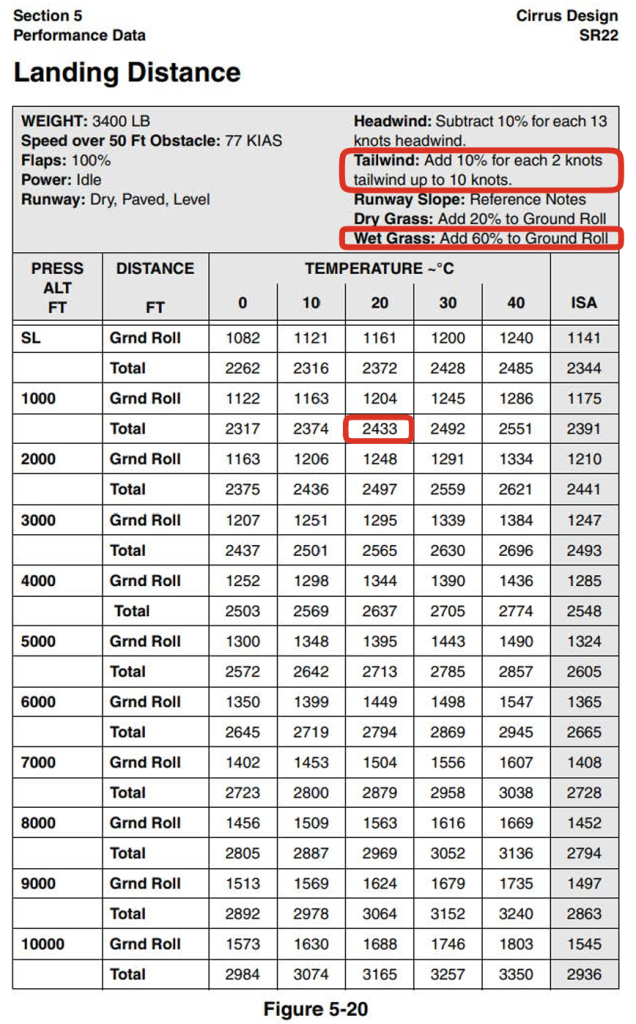
Performance information documented for the event stated that the calculated total landing distance required from the landing distance performance chart was 3,943 feet. This figure exceeded the available runway distance by 1,493 feet based on the 2,450-foot runway length at Spotts Field. The accident sequence occurred during the landing roll phase and was categorized as a runway excursion.
Findings and probable cause were stated as follows: “The pilot’s improper decision-making for the attempted landing, which resulted in a runway overrun due to inadequate runway landing distance with a quartering tailwind. Contributing to the accident was the wet condition of the runway.”
AviationBeacon Insight
Grass runways can reduce braking effectiveness when wet, and rolling can change surface friction and stopping performance. Night operations can also limit surface condition cues and reduce a pilot’s ability to judge remaining distance after touchdown. For short or soft-field environments, operational discipline typically centers on confirming landing distance required against runway length, tailwind limits, and establishing a firm touchdown point with a go-around decision if that point is not met. When runway stopping margins are limited, conservative wind selection and stabilized approach criteria help reduce workload during the landing roll.
Pilot Perspective: What go-around trigger do you use when landing on wet turf to ensure you meet a defined touchdown point and stopping margin?
We welcome operational perspectives from readers.