An amateur-built Robert G Elves Tarragon (TARR) airplane, registration N35RR, was substantially damaged in a crash near Shawmut, Arizona, on February 6, 2026, at 1532 mountain standard time. The flight was conducted under 14 CFR Part 91 as a personal flight. The pilot sustained fatal injuries and the passenger sustained serious injuries. No aircraft fire or explosion was reported, and no ground injuries were listed.
Flight track data downloaded from the airplane’s on-board avionics suite indicated the airplane departed Stellar Airpark (P19), Chandler, Arizona, at about 1439 local time. The recorded track showed the airplane initially flew south-southwest for about 26 nautical miles before turning to a west heading.
The same flight track data indicated the airplane continued about 26 nautical miles west. The data further indicated a full-stop landing at Gila Bend Municipal Airport (E63), Gila Bend, Arizona. Following that landing, the airplane taxied back to the departure runway without delay, consistent with an immediate taxi-back for departure.
After the subsequent takeoff from E63, recorded data showed the airplane headed east for about 14 nautical miles. The track then showed a turn to the northeast and continued for about 1 nautical mile. The recorded data ended at that point. The accident site was located about 2.4 nautical miles north-northwest of the final recorded position.
The airplane was equipped with a Galaxy GRS Parachute Rescue System. At the accident scene, the parachute was found deployed. However, the bonded-on panels that covered the parachute harness straps along the fuselage sides had not separated from the airplane. A rocket motor associated with the parachute system was found about 800 feet south of the main wreckage.
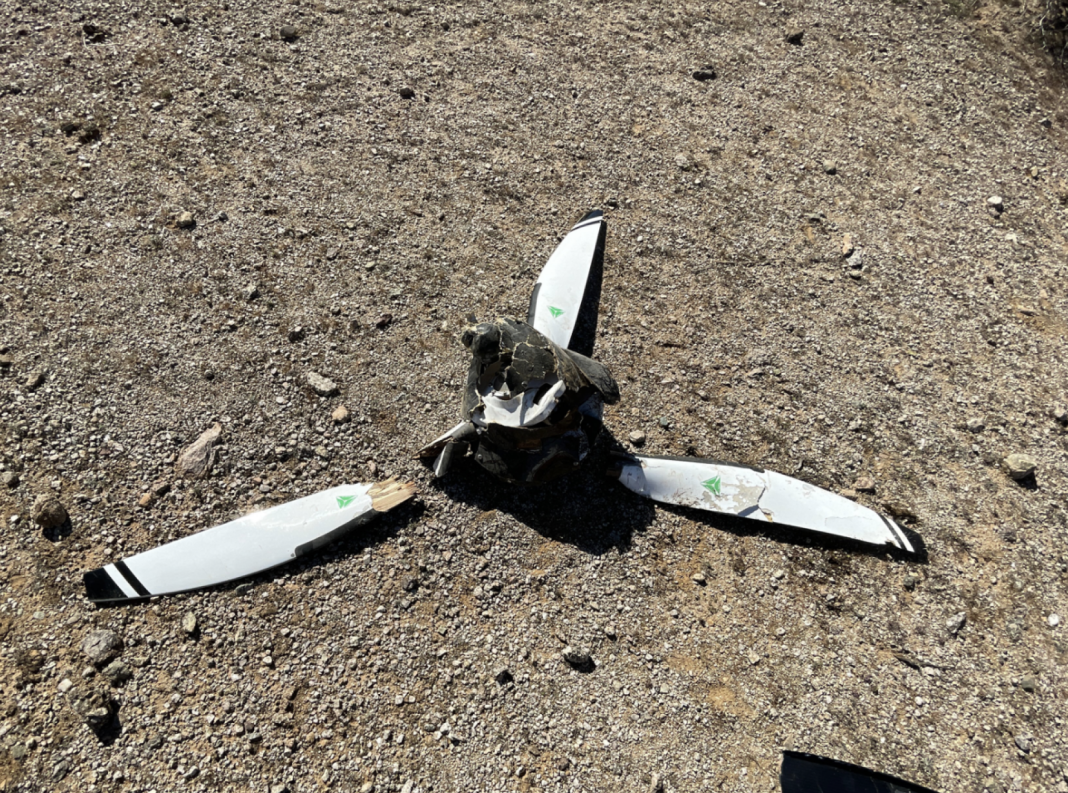
During an on-scene examination, the primary flight control system did not reveal any preimpact anomalies. The landing gear was found in the retracted position and the flaps were up. The propeller hub remained attached to the engine propeller flange. One propeller blade remained attached to the hub, while the other two blades were broken just outboard of the metal hub with portions of each blade root retained in the hub. The propeller blades were described as wood core construction with composite covering. All three blades exhibited minimal damage, and the two separated blades were located in the immediate area of the accident site.
Initial examination of the engine found the propeller flange could be rotated only a few degrees. Investigators removed the No. 1 and No. 2 cylinders, which revealed that the end of the No. 2 connecting rod that attached to the crankshaft had failed.
Meteorological information included visual meteorological conditions and daylight at the accident site. The observation referenced for the area was from KGYR, located about 26 nautical miles from the accident site, recorded at 1500 local time. Reported conditions included wind from 090 degrees at 8 knots, visibility 10 miles, and few clouds at 20,000 feet AGL. Temperature was 27°C with a dew point of 0°C. The altimeter setting was 30.07 inches of mercury. No flight plan was filed. The listed departure point was Chandler, Arizona (P19), with Chandler (P19) as the destination.
Findings and probable cause: The preliminary information stated that examination of the airplane’s primary flight control system did not reveal any preimpact anomalies, and that cylinder removal revealed the end of the No. 2 connecting rod that attached to the crankshaft had failed. A probable cause was not stated in the provided material.
AviationBeacon Insight
When track data ends before an accident site, the remaining sequence often relies on physical evidence and recorded system information. In this case, on-scene observations included a deployed ballistic parachute system with fuselage-side harness cover panels that had not separated, and an engine finding involving internal component failure. Operationally, this type of event highlights the importance of maintaining aircraft system familiarity, including any required steps, limitations, or configuration considerations for parachute activation, and maintaining disciplined emergency checklists and cockpit task management during abnormal engine indications.
Pilot Perspective: In an engine-power abnormality after departure, what cockpit trigger (airspeed, altitude, or checklist gate) do you use to transition from troubleshooting to committing to off-airport landing or parachute deployment?
We welcome operational perspectives from readers.